
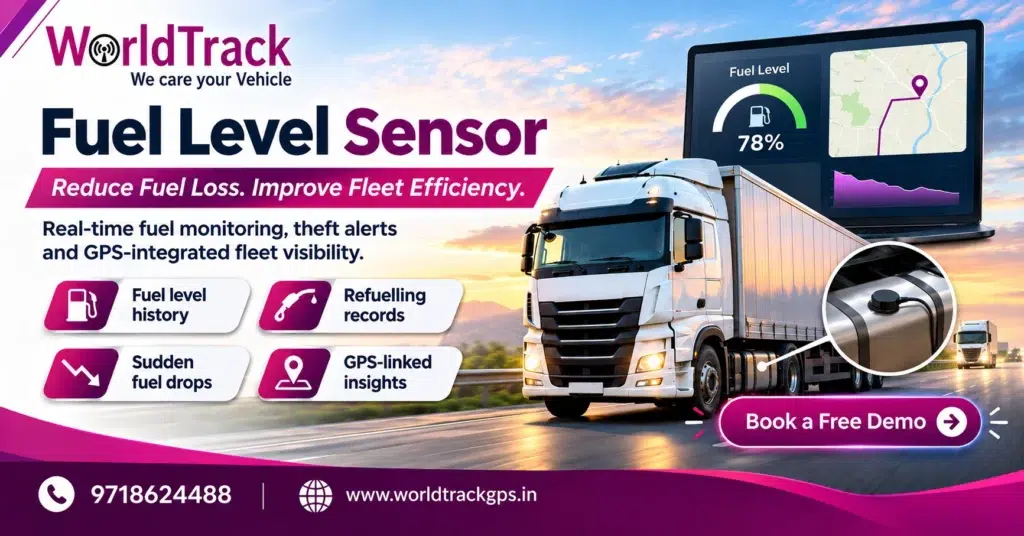
Fuel costs are rising. Do you know where every litre goes?
For transport companies, logistics providers and commercial fleet operators, fuel is a major operating expense. Even small discrepancies in consumption records can become difficult to manage when several vehicles operate across different routes and locations.
Traditional fuel management often relies on driver reports, manual entries, fuel purchase receipts and dashboard indicators. Although these methods provide basic information, they may not offer sufficient visibility into unexpected fuel losses or irregular refuelling activities.
A Fuel Level Sensor integrated with GPS tracking technology helps businesses monitor fuel levels, review consumption patterns and investigate unusual changes more effectively.
At WorldTrack GPS, we provide connected fuel monitoring solutions designed to support greater fleet visibility, fuel accountability and smarter operational decision-making.
Whether you manage a single commercial truck or a growing vehicle fleet, understanding fuel usage is an important step towards controlling operating expenses.
What Is a Fuel Level Sensor?
A Fuel Level Sensor is an electronic device designed to measure the amount of fuel present inside a vehicle’s tank.
When integrated with a compatible GPS tracking system, the sensor can transmit fuel-level information to a monitoring platform. Fleet managers can then review fuel readings, track historical changes and examine relevant vehicle activities remotely.
Unlike traditional dashboard indicators, connected fuel monitoring solutions can provide recorded data that supports more detailed fuel analysis.
A GPS-integrated Fuel Level Sensor can help businesses monitor:
- Current fuel levels
- Historical fuel-level changes
- Refuelling activities
- Sudden fuel-level reductions
- Fuel consumption patterns
- Location-linked fuel events
These insights help vehicle owners and fleet managers identify irregularities and make more informed fuel management decisions.
Why Is Fuel Level Monitoring Important for Fleet Businesses?
Imagine operating a fleet of 30 commercial trucks travelling across multiple cities.
Each vehicle follows different routes, carries varying loads and requires refuelling at different intervals.
Managing every fuel transaction manually can become challenging, particularly when fleet managers need to compare consumption across vehicles.
Without connected monitoring, businesses may encounter several difficulties.
Unexpected Fuel Loss: Sudden reductions in tank levels can go unnoticed until fuel records are reviewed.
Inconsistent Refuelling Records: Manual entries may not always match actual changes in tank levels.
Limited Consumption Visibility: Fleet managers may struggle to identify unusual fuel usage patterns.
Difficult Fleet-Wide Reporting: Reviewing fuel information for multiple vehicles can require significant administrative effort.
A GPS Fuel Monitoring System helps address these challenges by making supported fuel information available through a connected platform.
5 Major Benefits of a Fuel Level Sensor for Fleet Management
1. Real-Time Fuel Level Monitoring
Knowing the available fuel quantity can help fleet operators organise vehicle activities and refuelling requirements.
A connected Fuel Level Sensor enables users to view supported fuel readings remotely through a compatible monitoring platform.
This can be particularly useful for commercial vehicles travelling long distances or operating across several locations.
With improved fuel visibility, businesses can make more informed decisions about refuelling schedules and vehicle operations.
2. Detect Potential Fuel Theft and Unusual Fuel Drops
Fuel theft and unexplained shortages can create additional expenses for commercial vehicle owners.
A properly configured Fuel Level Sensor can identify sudden reductions in tank levels and support alerts when unusual changes occur.
Fleet managers can investigate these events using available fuel history and GPS tracking information.
However, not every sudden reduction indicates theft. Fuel movement, leakage, sensor conditions and vehicle operation can also influence readings.
Reviewing the circumstances of each event helps businesses avoid unnecessary assumptions.
The key benefit is better visibility into suspicious fuel activity, allowing fleet managers to investigate potential losses sooner.
3. Analyse Fuel Consumption and Usage Trends
Fuel consumption depends on several factors, including driving conditions, vehicle maintenance, traffic, route selection and operational requirements.
A Fuel Level Sensor provides historical measurements that can help businesses analyse changes in fuel usage.
When fuel data is reviewed alongside GPS journey records, fleet managers may identify unusual patterns that require attention.
For example, differences in consumption between similar vehicles may prompt further investigation into route conditions, vehicle performance or operational practices.
Although a sensor does not directly improve vehicle mileage, the information it provides can support better fuel management.
4. Improve Refuelling Records and Transparency
For businesses managing commercial fleets, maintaining reliable refuelling records is essential.
A connected Fuel Level Sensor helps fleet managers review fuel-level increases associated with refuelling activities.
These records can be compared with fuel purchase receipts and internal reporting information.
Such comparisons may help identify discrepancies, investigate unusual transactions and improve accountability.
More organised refuelling records also support better operational reporting and expense management.
5. Strengthen Fleet Efficiency and Operational Control
Fleet management involves coordinating vehicles, drivers, journeys and operating expenses.
Integrating fuel monitoring with GPS tracking allows businesses to review fuel-related activities alongside vehicle movements.
This provides additional context for operational decisions.
Fleet managers can use the available information to support refuelling planning, investigate potential losses and evaluate fuel-related performance over time.
Better fuel information supports better fleet management decisions.
4 Key Features of a GPS-Integrated Fuel Level Sensor
Modern fuel monitoring solutions can offer several useful capabilities for commercial fleet operations.
Fuel Level History
Review recorded fuel-level changes across selected periods.
Historical information can help fleet managers compare fuel usage trends and investigate unusual activity.
Refuelling Records
Monitor increases in fuel levels associated with refuelling events.
These records support comparisons between vehicle fuel data and purchase information.
Sudden Fuel Drops
Identify unexpected decreases in fuel levels that may require investigation.
Configured notifications can help fleet operators become aware of relevant changes sooner.
GPS-Linked Insights
Connect fuel information with vehicle location, routes and journey records.
This additional context can help businesses understand when and where fuel-related events occurred.
Together, these features support more transparent and organised fuel monitoring.
How Does a Fuel Level Sensor Work with GPS Tracking?
A GPS-integrated fuel monitoring solution typically involves a compatible fuel sensor, GPS tracking equipment and monitoring software.
The process can be understood in four steps.
Step 1: Fuel Measurement
The installed sensor measures the fuel level inside the vehicle’s tank.
Step 2: Data Communication
Fuel measurements are shared with the connected tracking system through a compatible communication interface.
Step 3: Remote Monitoring
The system transmits available information to a monitoring platform, subject to connectivity and device configuration.
Step 4: Reporting and Analysis
Fleet managers review supported fuel history, refuelling information, unusual changes and relevant GPS records.
The availability of particular reports, notifications and measurement capabilities depends on the equipment and system setup.
Which Industries Need a Fuel Level Sensor?
A Fuel Level Sensor can be useful wherever vehicle fuel consumption contributes significantly to operating expenses.
Transport and Logistics Companies
Transport businesses can monitor fuel-related activities across trucks and delivery vehicles, supporting better oversight of refuelling records and consumption patterns.
Construction and Infrastructure Businesses
Construction companies may use compatible fuel monitoring systems to review fuel consumption in commercial vehicles and supported equipment.
Passenger Transport Operators
Bus operators and commercial passenger transport businesses can benefit from more organised fuel records and improved operational visibility.
Fleet Management Companies
Organisations responsible for multiple vehicles can use connected monitoring to evaluate fuel usage patterns and investigate unexpected changes.
Commercial Vehicle Owners
Individual truck and commercial vehicle owners can gain additional information about fuel levels, refuelling events and potential fuel losses.
The suitability of a sensor should be confirmed according to vehicle type, tank design and installation requirements.
Fuel Level Sensor vs Traditional Fuel Monitoring
Traditional fuel monitoring generally involves fuel receipts, manual records and dashboard readings.
These methods can be useful, but they may provide limited historical information or require additional manual verification.
A connected Fuel Level Sensor offers another approach.
| Monitoring Area | Traditional Method | GPS-Integrated Fuel Level Sensor |
|---|---|---|
| Fuel Level Information | Dashboard readings or manual checks | Remote readings through a compatible platform |
| Fuel History | Often manually recorded | Recorded fuel-level changes |
| Refuelling Activities | Receipts and driver reports | Fuel-level changes for comparison |
| Unexpected Fuel Loss | May be noticed during later checks | Sudden changes can be identified through monitoring |
| Vehicle Location Context | Requires separate tracking records | Can be reviewed alongside compatible GPS data |
| Fleet Reporting | Manual compilation | Supported digital reports |
GPS-based fuel monitoring complements responsible fleet management practices rather than eliminating the need for maintenance, verification or accurate recordkeeping.
How to Choose the Right Fuel Level Sensor for Your Vehicle
Selecting the appropriate Fuel Level Sensor requires evaluating both the vehicle and its intended application.
Check Vehicle and Tank Compatibility
Different vehicles use different tank designs and fuel systems.
Confirm whether the sensor is suitable for the vehicle and tank configuration before installation.
Understand the Available Sensor Technologies
Fuel monitoring applications may use capacitive, ultrasonic or other sensor technologies.
Each technology has different installation and measurement considerations.
Evaluate GPS Tracking Compatibility
Ensure the selected sensor can communicate with the intended GPS tracking device and monitoring platform.
Review Monitoring Features
Consider whether the system supports the fuel history, refuelling records, alerts and reporting capabilities your business needs.
Consider Installation and Calibration
Proper installation and calibration can influence measurement quality.
Businesses should discuss installation requirements and expected operating conditions with their solution provider.
Why Choose WorldTrack GPS for Fuel Monitoring?
At WorldTrack GPS, we understand that commercial vehicle management requires reliable information and greater visibility into daily operations.
Our fuel monitoring solutions combine compatible Fuel Level Sensor technology with GPS tracking capabilities to support more informed operational decisions.
Businesses can explore solutions designed to assist with:
- Monitoring fuel levels and historical changes
- Reviewing refuelling-related information
- Identifying unusual fuel-level reductions
- Connecting fuel events with available GPS records
- Supporting better fleet reporting and accountability
Our solutions are relevant to transport companies, logistics providers, commercial vehicle owners and organisations managing multiple vehicles.
For additional product information, visit our Fuel Level Sensor solutions page.
You can also explore our Truck GPS Tracking System for related commercial vehicle monitoring capabilities.
Frequently Asked Questions
What is the main function of a Fuel Level Sensor?
A Fuel Level Sensor measures the quantity of fuel inside a vehicle’s tank. When connected to a compatible monitoring system, it helps users view fuel readings, analyse historical changes and investigate unusual fuel activity.
Can a Fuel Level Sensor help detect fuel theft?
Yes. A properly configured system can identify sudden fuel-level reductions that may indicate unauthorised fuel removal. However, unusual readings should be investigated before concluding that theft occurred.
Is a Fuel Level Sensor suitable for commercial trucks?
Compatible Fuel Level Sensors can be installed in commercial trucks to support fuel monitoring. The appropriate solution depends on the vehicle, tank design and GPS integration requirements.
Can a GPS Fuel Monitoring System track refuelling activities?
A compatible system can record increases in fuel levels that may correspond to refuelling events. Fleet managers can compare these records with fuel purchase information.
Does a Fuel Level Sensor directly improve mileage?
No. A Fuel Level Sensor measures fuel levels and helps users understand consumption patterns. It does not directly change engine efficiency or vehicle mileage.
What is the price of a Fuel Level Sensor in India?
The price varies depending on sensor technology, compatibility, installation requirements and GPS monitoring features. Contact WorldTrack GPS to discuss your requirements and request a quotation.
Take Better Control of Your Fleet’s Fuel Consumption with WorldTrack GPS
Managing fuel expenses effectively begins with understanding how fuel is used.
Without reliable monitoring information, unexpected losses and inconsistent refuelling records can become difficult to investigate.
A GPS-integrated Fuel Level Sensor helps businesses access useful fuel information, review unusual changes and make more informed fleet management decisions.
Whether you manage a single commercial truck or multiple vehicles operating across India, WorldTrack GPS can help you explore suitable fuel monitoring solutions.
Monitor Fuel Smarter. Improve Fleet Visibility. Make Better Decisions.
Book Your Free Fuel Monitoring Demo Today
Discover how WorldTrack GPS can support your vehicle and fleet monitoring requirements.
Call: 9718624488
Email: gps.worldtrack@gmail.com