
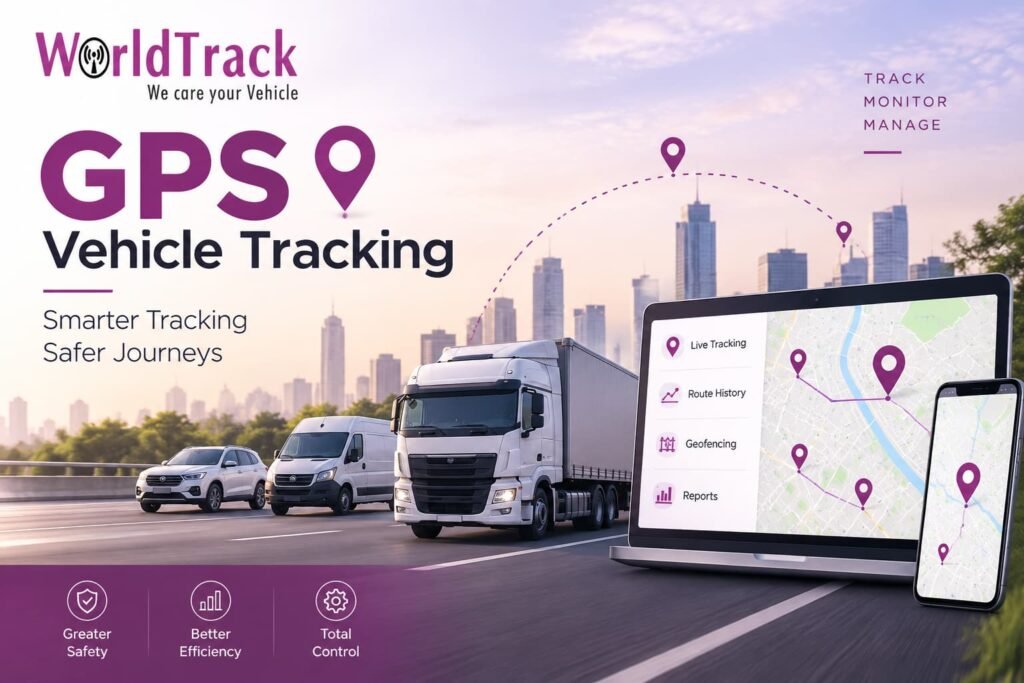
GPS vehicle tracking provides a practical way to monitor vehicles in real time, understand vehicle movement, improve driver safety, and manage fleet operations more efficiently.
Managing vehicles without knowing where they are, how they are being driven, or whether they are following the planned route can be difficult for any business. This is especially true when a company operates multiple cars, trucks, taxis, school buses, delivery vehicles, or commercial fleets.
But how does GPS vehicle tracking actually work, and what makes it useful for businesses?
Let’s understand it step by step.

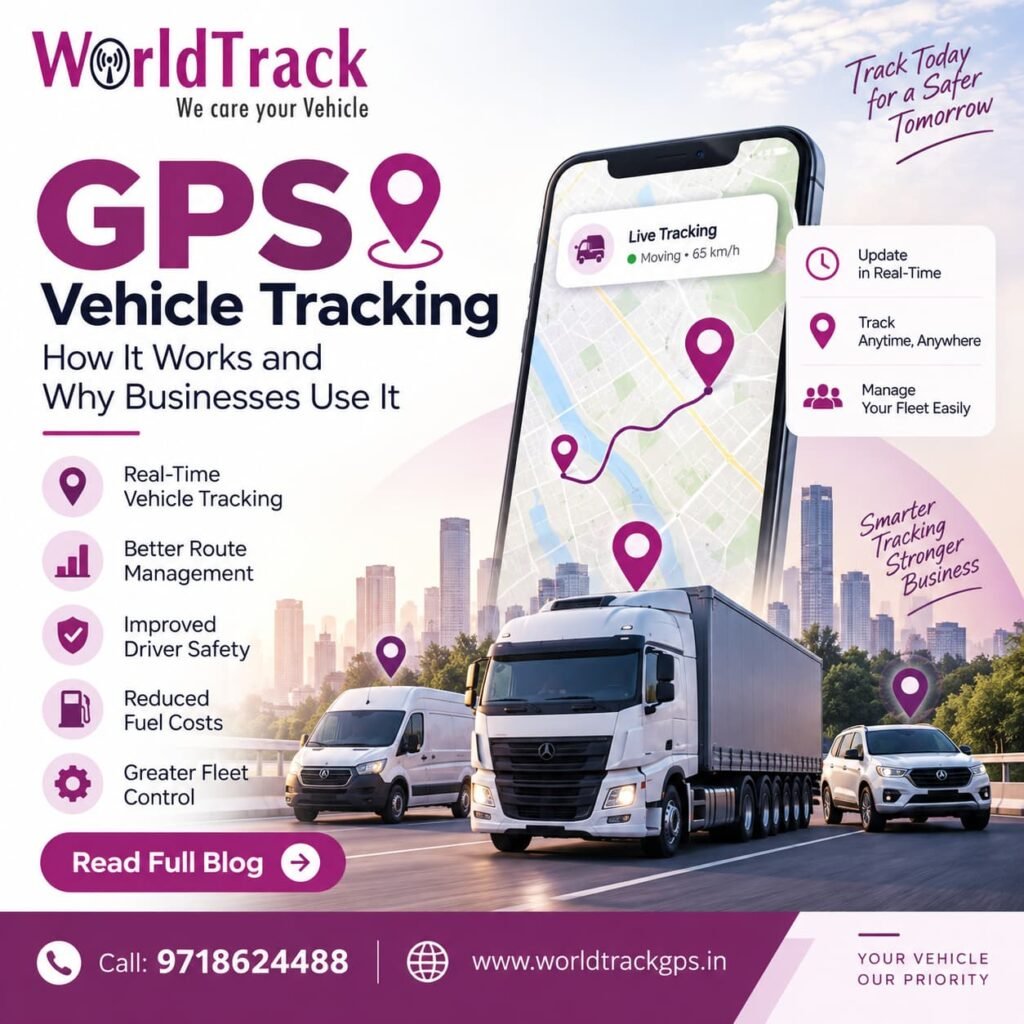
What Is GPS Vehicle Tracking?
GPS vehicle tracking is a technology that uses a GPS tracking device installed in a vehicle to determine its location and transmit information to a tracking platform.
The system can show the vehicle’s current or recent location on a digital map. Depending on the tracker and software, businesses can also monitor information such as vehicle speed, routes, stops, travel history, ignition status, and driving behavior.
Instead of relying on phone calls or manual updates to know where a vehicle is, fleet managers can access useful information from a centralized tracking system.
In simple terms:
GPS vehicle tracking helps businesses know where their vehicles are, where they have been, and how they are being used.
How Does GPS Vehicle Tracking Work?
A typical GPS vehicle tracking system works through three main components:
1. GPS tracking device
A GPS tracker is installed inside the vehicle. It receives signals from GPS satellites to determine the vehicle’s location.
Depending on the device, it may also collect information such as:
- Vehicle location
- Speed
- Direction
- Ignition status
- Route history
- Stoppage information
- Driving behavior
- Geofence activity
2. Mobile network
The tracking device uses a cellular network to send location and vehicle data to the tracking platform.
This allows information from the vehicle to reach the monitoring system remotely.
3. Tracking software or mobile app
The collected information is displayed through GPS tracking software or a mobile application.
A business owner or fleet manager can use the platform to view vehicles, review routes, receive alerts, and analyze vehicle activity.
This creates a simple flow:
GPS satellites → Tracking device → Mobile network → Tracking platform → User
The result is a convenient way to monitor vehicles without manually contacting drivers throughout the day.
What Information Can a GPS Tracking System Provide?
Modern vehicle tracking systems can provide much more than a vehicle’s location.
Depending on the device and service, businesses may be able to monitor:
Real-time location: See where vehicles are currently located.
Route history: Review where a vehicle travelled during a particular period.
Speed monitoring: Identify speeding or other potentially unsafe driving patterns.
Geofencing: Create virtual boundaries and receive alerts when vehicles enter or leave designated areas.
Stoppage information: Understand where and how long vehicles remained stationary.
Ignition activity: Monitor when a vehicle is started or stopped when supported by the tracking device.
Driver behavior: Some systems can provide information about speeding, harsh braking, acceleration, and other driving events.
These features can help turn vehicle data into practical information for day-to-day fleet management.
Why Do Businesses Use GPS Vehicle Tracking?
GPS tracking is useful because it helps businesses make decisions based on actual vehicle activity instead of assumptions.
Here are some of the most important benefits.
1. Real-Time Fleet Visibility
When vehicles are working across different locations, knowing their current position can make operations easier to manage.
A fleet manager can check vehicle locations and coordinate assignments without repeatedly calling drivers.
This can be particularly useful for logistics, transportation, delivery, service, and field-service businesses.
2. Better Route Management
Vehicle tracking allows businesses to review routes and identify unnecessary travel, repeated stops, or route deviations.
With better visibility, managers can make more informed decisions about vehicle allocation and route planning.
This can help improve operational efficiency while reducing avoidable travel.
3. Improved Driver Safety
Driver safety is another important reason businesses adopt GPS tracking.
Speed alerts and driving-behavior information can help fleet managers identify risky driving patterns and take corrective action.
The objective isn’t simply to monitor drivers. It is to encourage safer driving and create greater accountability on the road.
4. Vehicle Security
A GPS tracker can provide location information that may be valuable when a vehicle is used without authorization or its location needs to be verified.
Geofencing and movement alerts can also help businesses become aware of unexpected vehicle activity.
GPS tracking should therefore be considered an additional layer of vehicle security rather than a replacement for other security measures.
5. Better Fleet Productivity
Businesses need their vehicles to spend more time performing productive work.
Tracking information can help managers understand vehicle utilization, unnecessary idle time, route patterns, and operational delays.
This information can support better planning and fleet utilization.
6. Reduced Unnecessary Expenses
Vehicle-related costs can quickly add up for businesses.
Fuel usage, unnecessary travel, excessive idling, inefficient routes, and unauthorized vehicle use can all affect operating expenses.
GPS tracking does not automatically reduce these costs, but it gives businesses the visibility needed to identify potential inefficiencies and take appropriate action.
What Is Geofencing in GPS Tracking?
Geofencing is a GPS tracking feature that allows a business to create a virtual geographical boundary around a particular location.
For example, a company could create a geofence around:
- A warehouse
- Office
- Construction site
- Customer location
- School
- Delivery zone
When a tracked vehicle enters or leaves the defined area, the system can generate an alert if that feature is supported.
This can make fleet monitoring more proactive instead of requiring someone to constantly watch the map.
Who Can Benefit From GPS Vehicle Tracking?
GPS tracking isn’t limited to large transport companies.
It can be useful for:
- Logistics and transportation companies
- Delivery businesses
- School bus operators
- Taxi and cab services
- Employee transportation providers
- Construction companies
- Field-service businesses
- Rental vehicle operators
- Businesses with company cars
- Small and medium-sized fleets
The right tracking solution depends on the type of vehicles, operational requirements, reporting needs, and budget.
How to Choose a GPS Vehicle Tracking Solution
Before selecting a GPS tracking system, businesses should look beyond the basic question of whether it provides vehicle location.
Consider factors such as:
- Real-time tracking availability
- Mobile app and web access
- Location and route history
- Geofencing
- Alerts and notifications
- Driver behavior monitoring
- Reporting capabilities
- Device reliability
- Customer support
- Installation requirements
- Scalability for future fleet growth
A good GPS tracking solution should solve an actual operational problem rather than simply add another software dashboard to the business.
Frequently Asked Questions
Q1: Is GPS vehicle tracking useful for small businesses?
Yes. Small businesses can also benefit from GPS tracking, particularly when vehicles are used for deliveries, field services, transportation, or regular business travel. The right solution should match the size and requirements of the fleet.
Q2: Does GPS tracking work when a vehicle is moving?
A GPS tracker can determine the vehicle’s location while it is operating, provided the device has the necessary GPS and communication connectivity. The frequency and availability of updates depend on the specific device and service.
Q3: Can GPS tracking help prevent vehicle theft?
GPS tracking can help businesses locate and monitor a vehicle, which may be useful when unauthorized movement occurs. However, it should be treated as one part of a broader vehicle-security strategy.
Q4: Can GPS tracking reduce fuel costs?
GPS tracking can help identify inefficient routes, excessive idling, unauthorized usage, and other patterns that may contribute to unnecessary fuel consumption. Actual savings depend on how the business uses the information and takes corrective action.
Q5: Is GPS tracking only useful for large fleets?
No. GPS tracking can be useful for a single commercial vehicle as well as a large fleet. The important consideration is choosing features appropriate for the vehicle and business requirements.
Q6: What is the difference between GPS tracking and fleet management?
GPS tracking primarily provides vehicle location and related information. Fleet management is broader and can include vehicle tracking, driver behavior, maintenance, fuel management, route planning, reporting, and other operational activities.
Final Thoughts
GPS vehicle tracking has become an important tool for businesses that depend on vehicles every day. By providing visibility into vehicle location, routes, driving behavior, and fleet activity, it can help businesses make better operational decisions.
The biggest benefit isn’t simply seeing a vehicle moving on a map. The real value comes from using tracking data to improve safety, efficiency, vehicle security, productivity, and fleet management.
If your business operates one vehicle or a growing fleet, the right GPS tracking solution can give you greater visibility and control over everyday vehicle operations.
Looking for a GPS Tracking Solution for Your Vehicles?
WorldTrack GPS provides vehicle tracking solutions designed to help businesses monitor vehicles, improve fleet visibility, and manage vehicle operations more effectively.
Whether you manage commercial vehicles, delivery vehicles, employee transportation, or a larger fleet, our team can help you understand which tracking solution fits your requirements.
Get in touch with WorldTrack GPS today to discuss your vehicle tracking requirements and explore the right solution for your business.
Call: 9718624488
Email: gps.worldtrack@gmail.com
Website: www.worldtrackgps.in