Introduction
Managing commercial vehicles has become more challenging than ever. Rising fuel costs, increasing customer expectations, vehicle theft risks, and the demand for real-time visibility have forced businesses to rethink how they manage their fleets. A modern Vehicle GPS Tracking System helps businesses address these challenges by providing real-time tracking, route optimization, driver monitoring, theft prevention, and actionable fleet management insights.
Whether you operate a logistics company, delivery service, construction fleet, school transportation system, or service vehicles, knowing where your vehicles are and how they are being used is no longer a luxury—it’s a business necessity.
In 2026, GPS tracking systems have evolved far beyond simple location monitoring. Modern solutions provide real-time tracking, driver behavior insights, fuel management, route optimization, theft recovery, maintenance alerts, and advanced reporting that help businesses reduce costs and improve operational efficiency.
This guide explains why every commercial vehicle should be equipped with a GPS tracking system and how businesses can benefit from this technology.
What Is a GPS Tracking System?
A GPS (Global Positioning System) tracking system is a technology solution that uses satellite positioning to determine and monitor the real-time location of vehicles.
Modern GPS trackers combine:
- Real-time vehicle tracking
- Route history and playback
- Driver behavior monitoring
- Geofencing alerts
- Fuel consumption monitoring
- Engine diagnostics
- Theft prevention and recovery
- Fleet performance analytics
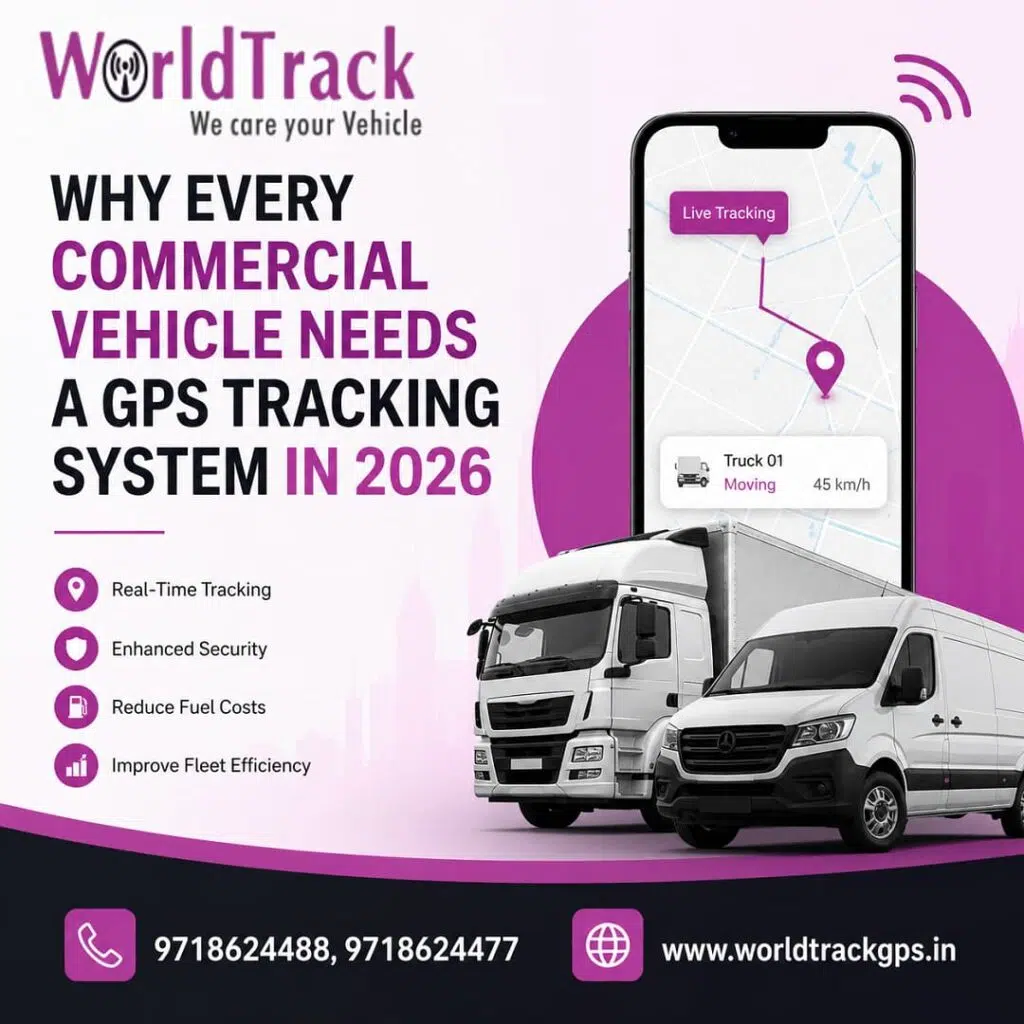
These features provide fleet managers with complete visibility and control over their vehicles from a single dashboard.
Why GPS Tracking Is Essential for Commercial Vehicles in 2026
1. Real-Time Vehicle Visibility
One of the biggest advantages of GPS tracking is knowing exactly where your vehicles are at any given moment.
Fleet managers can:
- Monitor vehicle locations live
- Track deliveries and service calls
- Verify arrival and departure times
- Improve dispatch operations
- Respond quickly to unexpected situations
Real-time visibility improves operational efficiency and helps businesses deliver better customer service.
2. Reduced Fuel Costs
Fuel expenses remain one of the largest operational costs for commercial fleets.
GPS tracking helps reduce fuel consumption by:
- Optimizing routes
- Eliminating unnecessary detours
- Reducing idle time
- Monitoring speeding behavior
- Identifying inefficient driving patterns
Businesses that implement GPS tracking often discover significant opportunities to improve fuel efficiency and reduce operating expenses.
3. Enhanced Driver Safety
Driver safety has become a major priority for organizations across industries.
Advanced GPS tracking systems monitor:
- Harsh braking
- Rapid acceleration
- Excessive speeding
- Sharp cornering
- Distracted driving behaviors
Fleet managers can use this information to provide coaching, improve safety standards, and reduce accident risks.
Safer drivers lead to lower insurance costs, fewer vehicle repairs, and improved public reputation.
4. Vehicle Theft Prevention and Recovery
Commercial vehicle theft continues to impact businesses worldwide.
GPS tracking systems offer:
- Instant theft alerts
- Real-time location monitoring
- Remote immobilization capabilities (where available)
- Geofence breach notifications
- Fast vehicle recovery support
In many cases, GPS tracking significantly increases the chances of recovering stolen vehicles quickly.
5. Improved Customer Service
Customers expect accurate delivery updates and timely service.
GPS tracking helps businesses:
- Provide accurate ETAs
- Improve delivery scheduling
- Reduce delays
- Enhance communication
- Increase customer satisfaction
When businesses know where their vehicles are in real time, they can offer a more reliable customer experience.
6. Better Route Optimization
Traffic congestion, road closures, and inefficient routing can waste valuable time and fuel.
Modern GPS systems use intelligent routing technology to:
- Identify faster routes
- Avoid traffic delays
- Reduce travel time
- Improve productivity
- Increase the number of daily service calls or deliveries
Optimized routes benefit both businesses and customers.
7. Lower Fleet Operating Costs
GPS tracking provides detailed insights into fleet performance.
Businesses can identify:
- Unnecessary overtime
- Excessive idle time
- Unauthorized vehicle use
- Inefficient routes
- Fuel wastage
These insights help reduce operational expenses while improving overall productivity.
8. Prevent Unauthorized Vehicle Usage
Commercial vehicles are valuable business assets.
GPS tracking allows managers to:
- Monitor after-hours vehicle activity
- Track unauthorized trips
- Receive instant alerts when vehicles leave designated areas
- Ensure compliance with company policies
This level of accountability protects company resources and reduces misuse.
9. Predictive Maintenance and Vehicle Health Monitoring
Unexpected vehicle breakdowns can disrupt operations and increase costs.
Advanced GPS tracking systems can monitor:
- Engine diagnostics
- Maintenance schedules
- Battery health
- Mileage thresholds
- Service reminders
Preventive maintenance helps extend vehicle lifespan and reduce downtime.
10. Data-Driven Decision Making
In 2026, successful fleet management relies on data.
GPS tracking systems generate valuable reports on:
- Driver performance
- Vehicle utilization
- Route efficiency
- Fuel consumption
- Maintenance history
- Operational productivity
These insights help businesses make smarter decisions and improve long-term performance.
Industries That Benefit Most from GPS Tracking
GPS tracking systems provide value across multiple industries, including:
Logistics and Transportation
Monitor shipments, improve delivery performance, and optimize fleet operations.
Delivery Services
Provide real-time tracking and accurate delivery estimates.
Construction Companies
Track heavy equipment and commercial vehicles across job sites.
School Transportation
Improve student safety through real-time vehicle monitoring.
Field Service Businesses
Optimize technician dispatching and improve response times.
Car Rental and Leasing Companies
Monitor vehicle locations and protect assets from theft.
Key Features to Look for in a GPS Tracking System
When selecting a GPS tracking solution, businesses should consider:
- Real-time vehicle tracking
- Mobile application access
- Route history reports
- Driver behavior monitoring
- Geofencing capabilities
- Maintenance alerts
- Fuel monitoring
- Cloud-based dashboard
- Theft recovery support
- Custom reporting features
Choosing a solution with these capabilities ensures long-term value and scalability.
How AI Is Transforming GPS Tracking in 2026
Artificial Intelligence is making Vehicle GPS Tracking System more intelligent than ever.
Modern AI-powered tracking systems can:
- Predict maintenance requirements
- Detect unusual driving behavior
- Forecast route delays
- Analyze fuel consumption patterns
- Automate fleet reporting
- Improve dispatch efficiency
Businesses that adopt AI-enabled GPS tracking gain a significant competitive advantage through smarter fleet management.
Frequently Asked Questions
Is GPS tracking legal for commercial vehicles?
In most regions, businesses can legally track company-owned vehicles for operational and security purposes. Organizations should always comply with local privacy regulations and inform employees about tracking policies.
Can GPS tracking reduce insurance costs?
Many insurance providers offer discounts for fleets equipped with GPS tracking systems because they improve security and driver accountability.
How accurate are GPS tracking systems?
Modern GPS trackers typically provide highly accurate location data, often within a few meters under normal operating conditions.
Is GPS tracking suitable for small businesses?
Yes. Small businesses can benefit significantly from improved route efficiency, reduced fuel costs, enhanced security, and better customer service.
Conclusion
As commercial transportation becomes increasingly competitive, businesses need better visibility, greater efficiency, and stronger security.
A modern Vehicle GPS Tracking System provides all three.
From reducing fuel costs and improving driver safety to preventing vehicle theft and optimizing fleet performance, GPS tracking has become an essential tool for businesses operating commercial vehicles in 2026.
Organizations that invest in advanced GPS tracking technology today are positioning themselves for lower operational costs, higher productivity, improved customer satisfaction, and sustainable business growth in the years ahead.
If your business relies on commercial vehicles, now is the time to implement a GPS tracking solution that delivers real-time visibility, actionable insights, and complete fleet control.
Take Control of Your Fleet Today
Don’t wait for rising fuel costs, vehicle theft, or inefficient operations to impact your business. Upgrade to a smart Vehicle GPS Tracking System and gain complete visibility of your fleet in real time.
📞 Call: 9718624488 | 9718624477
📧 Email: gps.worldtrack@gmail.com
🌐 Website: www.worldtrackgps.in
Request a Free Demo and discover how World Track GPS can help you improve fleet performance, security, and profitability.