Understanding how hidden fleet costs businesses goes beyond simply keeping vehicles on the road. For many organizations, the greater challenge lies in controlling the expenses that quietly build up behind every trip.
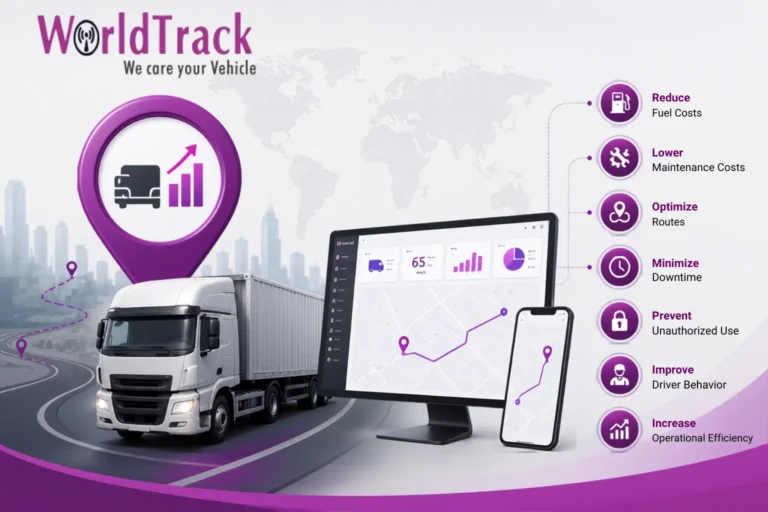
Fuel wastage, unnecessary mileage, vehicle downtime, unauthorized trips, inefficient driving, maintenance issues, and manual fleet management can all affect profitability. Individually, these expenses may seem small. Over time, however, they can become a significant part of a company’s operating costs.
The good news is that many of these hidden costs can be identified with better vehicle data.
A GPS tracking system for fleet operations gives businesses visibility into vehicle locations, routes, stops, movement, and usage patterns. Depending on the system, fleet managers can also monitor idling, geofencing events, driver behaviour, mileage, and other operational information.
This information can help businesses find areas where money is being lost and take practical steps to improve fleet efficiency.
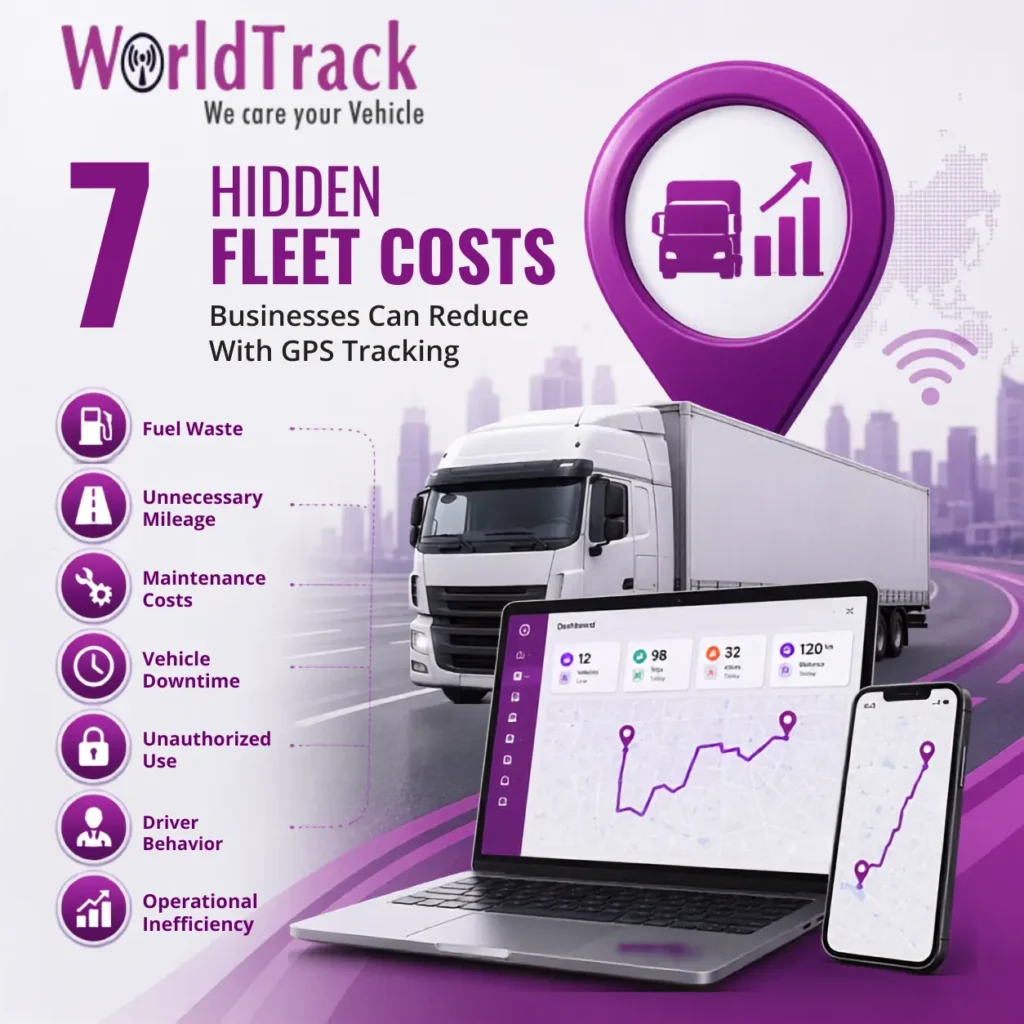
Here are seven hidden fleet costs that businesses can potentially reduce with GPS tracking.
1. Excessive Fuel Consumption
Fuel is one of the biggest recurring expenses for businesses operating commercial vehicles. Yet, knowing the monthly fuel bill does not always explain why consumption is higher than expected.
Excessive idling, unnecessary trips, inefficient routes, speeding, and aggressive driving can all contribute to higher fuel usage.
A GPS vehicle tracking system can help managers understand how vehicles are actually being used. Trip history, stops, idling activity, and route information can reveal patterns that may otherwise go unnoticed.
For example, if a delivery vehicle regularly remains stationary with the engine running for long periods, the business can investigate the reason and take corrective action.
The objective is not simply to monitor drivers. It is to identify avoidable fuel consumption and encourage more efficient vehicle use.
2. Unnecessary Vehicle Mileage
Every additional kilometre adds to the cost of operating a vehicle.
Unplanned detours, inefficient routes, repeated journeys, and unauthorized trips can increase mileage without providing additional business value.
With a fleet management system, managers can review actual routes and compare them with planned journeys.
This can help answer important questions:
- Was the planned route followed?
- Was an unnecessary detour taken?
- How many kilometres were travelled?
- Was the vehicle used outside business hours?
- Could multiple trips have been combined?
When this information is available, businesses can make better decisions about route planning and vehicle utilization.
Reducing unnecessary mileage can also help reduce fuel consumption, tyre wear, maintenance requirements, and overall vehicle operating costs.
3. Preventable Maintenance Expenses
Maintenance is unavoidable when you operate a fleet. Unexpected repairs, however, can be expensive.
A vehicle that is poorly maintained may experience more serious mechanical problems later. At the same time, a heavily used vehicle may require attention sooner than a vehicle that is used occasionally.
A vehicle tracking system can provide useful information about vehicle usage and mileage. When combined with a proper maintenance process, this information can help businesses plan servicing based on actual vehicle utilization.
Instead of waiting for a vehicle to develop a serious problem, fleet managers can use available operational data to support preventive maintenance planning.
This can help reduce unexpected repairs and keep vehicles available for business operations.
4. Vehicle Downtime
A vehicle that is unavailable can affect much more than the fleet’s maintenance budget.
For delivery companies, logistics operators, field-service businesses, transportation companies, and other fleet-dependent organizations, vehicle downtime can lead to delayed deliveries, missed appointments, customer complaints, and lost business opportunities.
GPS tracking cannot prevent every mechanical problem. However, it can provide better visibility into vehicle utilization and operational activity.
Managers can quickly identify which vehicles are active, inactive, or operating outside expected patterns.
When GPS tracking is combined with preventive maintenance and proper fleet planning, businesses can improve vehicle availability and respond more quickly to operational problems.
5. Unauthorized Vehicle Use
Unauthorized vehicle use can create hidden expenses through additional fuel consumption, mileage, maintenance, and vehicle wear.
For example, a vehicle may be used outside working hours or travel to locations that are not related to its assigned work.
A GPS tracking system for commercial vehicles can provide historical route information that helps managers investigate unusual vehicle activity.
Geofencing can provide an additional layer of visibility. Businesses can create virtual boundaries around offices, warehouses, project locations, customer sites, or other important areas.
When a vehicle enters or leaves a defined area, the system can generate an alert, depending on the available features.
This allows businesses to identify unusual activity without depending entirely on manual reporting.
6. Driver-Related Operating Costs
Driver behaviour can have a noticeable impact on fleet efficiency.
Speeding, harsh acceleration, sudden braking, excessive idling, and other inefficient driving patterns can increase fuel consumption, vehicle wear, and safety risks.
Modern fleet tracking solutions may provide driver-behaviour information that fleet managers can use for training and operational improvement.
For example, if a driver frequently demonstrates harsh braking or speeding patterns, management can address the issue through driver training and safer driving practices.
The goal should be improvement rather than simply punishment.
When drivers understand that safer and more efficient driving can benefit the business as well as themselves, organizations can develop a stronger culture of responsible vehicle use.
7. Administrative and Operational Inefficiency
Not every fleet cost comes directly from a vehicle.
A major driver of hidden fleet costs, businesses find, is administrative overhead: fleet managers spend valuable working hours checking vehicle locations, calling drivers, confirming arrival times, investigating delays, and preparing manual reports.
A centralized fleet management system can reduce some of this administrative burden by bringing important vehicle information into one dashboard.
Instead of calling multiple drivers to find out where vehicles are, managers can check available tracking information directly.
Trip history and reports can also make it easier to investigate customer queries, delivery delays, and unusual vehicle activity.
This can save management time and improve operational visibility.
How GPS Tracking Helps Reduce Fleet Costs
The real value of GPS tracking is not simply knowing where a vehicle is.
The bigger benefit is having reliable information about how vehicles are being used.
Depending on the solution, businesses can use GPS tracking to monitor:
- Real-time vehicle location
- Trip history
- Routes and stops
- Idling activity
- Vehicle movement
- Geofencing alerts
- Driver behaviour
- Mileage
- Vehicle utilization
- Operational reports
This information allows fleet managers to identify patterns and make better decisions.
For example, a business may discover that several vehicles regularly take inefficient routes. Another business may find that excessive idling is contributing to unnecessary fuel consumption.
Once the problem becomes visible, management can investigate it and take appropriate action.
Why Businesses Should Look Beyond Basic GPS Tracking?
Not every GPS tracker provides the same level of information.
To avoid the severe financial impact of hidden fleet costs, businesses should select a solution based on their actual operational requirements rather than choosing a device simply because it shows a vehicle’s location.
Before choosing a commercial vehicle GPS tracker, consider:
- Real-time tracking
- Route history
- Geofencing
- Alerts
- Reporting
- Driver-behaviour monitoring
- Dashboard usability
- Vehicle compatibility
- Installation requirements
- Customer support
- Scalability
A small business with a few vehicles may have different requirements from a logistics company managing a large fleet.
The right solution should be practical, easy to use, and aligned with the business’s fleet-management goals.
How Much Can a Business Save With GPS Tracking?
There is no single savings figure that applies to every fleet.
The potential benefit depends on several factors, including:
- Number of vehicles
- Vehicle type
- Average daily mileage
- Fuel consumption
- Driver behaviour
- Route efficiency
- Existing maintenance practices
- Unauthorized vehicle usage
- Fleet utilization
- How actively management uses tracking data
This is why businesses should focus on identifying their actual sources of fleet waste rather than expecting a fixed percentage of savings.
The more accurately a business understands its fleet operations, the easier it becomes to identify realistic opportunities for cost reduction.
Who Can Benefit From GPS Fleet Tracking?
GPS tracking can be useful for many businesses that depend on vehicles for daily operations.
Common examples include:
- Logistics companies
- Delivery businesses
- Transportation companies
- School bus operators
- Taxi and cab operators
- Field-service companies
- Construction companies
- Rental fleets
- Distribution businesses
- Commercial vehicle operators
Whether a business operates five vehicles or a much larger fleet, the basic objective remains the same: improve visibility, control unnecessary expenses, and use vehicles more efficiently.
What to Look for in a Fleet GPS Tracking System
Before purchasing a GPS tracking solution, businesses should consider both current and future requirements.
A useful system should provide reliable location information and an interface that managers can actually use.
Important considerations include:
Real-Time Tracking
Managers should be able to view vehicle locations and understand current fleet activity.
Route History
Historical route information can help investigate delays, detours, and unusual journeys.
Geofencing
Virtual boundaries can help businesses monitor movement around important locations.
Alerts
Custom alerts can help managers respond to specific vehicle events more quickly.
Reporting
Reports can turn vehicle activity into useful information for fleet decisions.
Easy Dashboard
A complicated system can reduce the practical value of GPS tracking. The dashboard should be easy for managers to understand and use.
Frequently Asked Questions
Q 1. What are hidden fleet costs?
Ans: Hidden fleet costs are expenses that may not be immediately visible in a company’s regular operating reports. They can include excessive fuel consumption, unnecessary mileage, unauthorized trips, vehicle downtime, inefficient driving, unexpected maintenance, and administrative time.
Q 2. Can GPS tracking reduce fleet operating costs?
Ans: Yes. GPS tracking can help businesses identify avoidable expenses related to fuel consumption, unnecessary mileage, inefficient routes, unauthorized vehicle use, idling, and certain driver-behaviour patterns. Actual savings depend on the fleet and how the business uses the information.
Q 3. How does GPS tracking help reduce fuel costs?
GPS tracking can provide information about vehicle routes, stops, idling, mileage, and driving patterns. Businesses can use this information to identify unnecessary fuel consumption and improve vehicle operating practices.
Q 4. Can GPS tracking prevent unauthorized vehicle use?
GPS tracking can help businesses identify and investigate unauthorized or unusual vehicle movement. Geofencing and alerts can also provide additional visibility when vehicles enter or leave predefined areas.
Yes. Small fleets can benefit from better visibility into vehicle locations, routes, mileage, and utilization. The required features will depend on the size and operational needs of the business.
Q 5. Is GPS tracking useful for small fleets?
Ans: Yes. Small fleets can benefit from better visibility into vehicle locations, routes, mileage, and utilization. The required features will depend on the size and operational needs of the business.
Final Thoughts
Fleet expenses do not always come from obvious sources.
Sometimes the cost is hidden in a few extra kilometres every day. Whether it stems from unnecessary idling, unauthorized trips, inefficient driving, unexpected downtime, or hours spent manually managing vehicles, this hidden fleet costs businesses serious money over time.
A GPS tracking system for fleet operations can bring greater visibility to these activities.
The purpose is not simply to watch vehicles on a map. The real objective is to use reliable information to improve fleet efficiency, reduce avoidable expenses, increase accountability, and make better operational decisions.
For businesses operating commercial vehicles, delivery fleets, logistics vehicles, school buses, or field-service vehicles, GPS tracking can be an important part of a modern fleet management strategy.
Call to Action
Want Better Control Over Your Fleet Costs?
Don’t let hidden fuel waste, unnecessary mileage, unauthorized trips, or inefficient vehicle use quietly increase your operating expenses.
WorldTrack GPS provides GPS tracking solutions designed to help businesses improve vehicle visibility, monitor fleet activity, and manage their vehicles more efficiently.
Talk to the WorldTrack GPS team today and find the right GPS tracking solution for your vehicles.
📞 Call: +91-9718624488, +91-9718624477
📧 Email: gps.worldtrack@gmail.com
🌐 Website: https://worldtrackgps.in